Global Walnut Consumption Trends: Snack, Bakery, and Culinary Demand
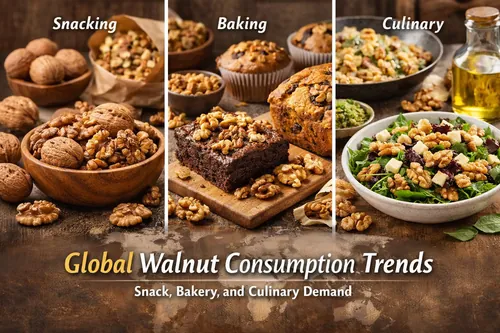
Global market guide: Global Walnut Consumption Trends: Snack, Bakery, and Culinary Demand. This deep-dive explains where demand comes from, how buyers map product forms to applications, and what to monitor when sourcing bulk walnut products for industrial programs.
Previous: Global Almond Consumption Trends: Key Regions and Product Forms • Next: Almond Trade Lanes and Export Markets: How California Supply Moves
Related: bulk walnut products • products catalog • request a quote
What this guide covers (and why it matters to buyers)
“Walnut demand” is not one market—it is a blend of retail snacking behavior, industrial bakery and confectionery usage, and culinary adoption across foodservice and packaged foods. Each demand lane prefers different walnut formats (in-shell vs kernels, halves vs pieces, light vs amber color, raw vs roasted), and each lane has different tolerance for moisture variation, breakage, defects, and oxidation risk.
If you are responsible for sourcing industrial walnut ingredients, your goal is to connect three realities: (1) where consumption is growing, (2) what product form those customers want, and (3) what quality and logistics controls protect your finished product shelf life.
Fast takeaways:
• Snacks favor consistent bite, clean flavor, and packaging that protects freshness.
• Bakery favors predictable piece size, low foreign material risk, and stable moisture for process control.
• Culinary favors “fresh” sensory quality and visually appealing color—especially for premium salads, sauces, and toppings.
• Buyers win by mapping each SKU to the right walnut form, then building a spec + packaging plan that protects oxidation.
Table of contents
- 1) Global demand snapshot: what drives walnut consumption
- 2) Snack demand: from in-shell gifting to seasoned kernel programs
- 3) Bakery & confectionery demand: size control, performance, and yield
- 4) Culinary demand: sauces, toppings, and menu innovation
- 5) Regional patterns: how preferences differ by destination
- 6) Product forms buyers source (and how to choose)
- 7) Seasonality & promotion calendar: when demand peaks
- 8) Procurement implications: specs, shelf life, and supply lanes
- 9) Quote-ready checklist for bulk walnut sourcing
- 10) FAQ
1) Global demand snapshot: what drives walnut consumption
Demand is pulled by three big forces
Across markets, walnut consumption typically increases when buyers can clearly communicate value on nutrition, taste, and convenience—and when supply can deliver consistent quality. That sounds generic, but it has practical meaning:
- Nutrition positioning supports snacking and “better-for-you” product lines. Walnuts are a notable plant-based source of omega-3 ALA, which influences consumer messaging and formulation decisions.
- Taste + texture supports bakery and culinary adoption (crunch, richness, and a premium “nutty” flavor).
- Convenience drives demand for ready-to-use pieces, portion packs, seasoned snack formats, and easy-to-blend ingredients.
Walnut demand behaves differently than almond demand
Almond demand is often anchored by broad snack usage and consistent global industrial demand. Walnut demand is also large, but it tends to be more sensitive to freshness perception (oxidation), and to cultural seasonality (gifting and holiday consumption). That is why procurement teams commonly treat walnuts as a category where packaging choice, temperature control, and lot age can matter as much as the negotiated price.
Buyer mindset shift: In many categories, quality problems show up at receiving. In walnuts, quality problems can also show up later—after weeks of storage, after ocean transit, or after roasted processing—if oxidation was not managed.
2) Snack demand: from in-shell gifting to seasoned kernel programs
Snack demand is typically the most visible demand engine because it directly touches consumers: grocery, club formats, convenience, e-commerce, and seasonal gift displays. Within “snacks,” there are two very different lanes: in-shell programs and kernel-based snacks.
In-shell walnuts: the “display” and gifting lane
In-shell walnuts are often purchased for visual impact, perceived freshness, and tradition. In many destination markets, in-shell format is used for holiday tables, gifting, and bulk retail displays. This lane is typically sensitive to:
- Shell appearance (uniformity, cleanliness, and whether shells are natural or bleached, depending on market preference).
- Moisture and storage stability (shell provides a barrier, but the product is not immune to poor storage conditions).
- Crack-out and kernel soundness (buyers still care about what’s inside).
For industrial buyers, in-shell demand matters because it can pull product away from kernel markets in certain seasons—or increase sorting pressure at origin. If your program uses kernels, you track in-shell demand because it can influence availability and price dynamics for specific grades.
Kernel snacks: the convenience lane
Kernel snacks include raw kernels, roasted kernels, seasoned kernels, trail mixes, and portion-controlled packs. This lane is less about display and more about repeat purchase behavior. It is driven by:
- Flavor formats (salted, spiced, sweet glaze profiles, smoke, chili-lime, etc.).
- Texture predictability (consistent bite, controlled breakage, and stable roast results).
- Clean flavor and low rancidity risk (snack buyers are especially sensitive to off-notes).
What snack brands require from bulk walnut sourcing
Snack manufacturing tends to reward suppliers that deliver consistency. The “best” spec is the one that meets sensory targets with minimal rework on the line. In practice, snack buyers often confirm:
- Color targets (e.g., lighter lots for premium snack SKUs where appearance drives consumer perception).
- Defect limits (insect, dark kernels, shrivels, mold, foreign material control).
- Moisture targets to stabilize roast and shelf life.
- Packaging barrier (liners, vacuum options, nitrogen flush program-dependent) based on distribution and shelf-life needs.
Snack SKU rule of thumb: the shorter the ingredient list, the more the walnut must “carry” the product. That means tighter sensory expectations, more attention to oxidation, and stronger receiving QC.
3) Bakery & confectionery demand: size control, performance, and yield
Bakery and confectionery demand is a core driver of global walnut usage because walnuts integrate well into breads, cookies, brownies, cakes, fillings, coatings, and inclusions. For buyers, this lane is highly operational: if walnut size distribution or moisture is inconsistent, yield and line performance suffer.
Why bakery buyers focus on cut/size specification
The same “walnut pieces” label can mean very different performance outcomes. In bakery, size impacts:
- Mixing and distribution (segregation risk in dry blends, evenness in batter and dough).
- Piece visibility (premium appearance in cookies, toppings, and inclusions).
- Breakage during processing (mix time, shear, and conveying can further reduce piece size).
- Finished texture (crunch, bite, and perceived quality).
Bakery demand often prefers predictable “workhorse” specs
Bakery plants frequently choose specs that are forgiving: a controlled range of piece sizes that runs smoothly, plus quality constraints that reduce “unexpected” downtime (foreign material, clumps, excessive fines, or moisture issues). Typical buyer checkpoints include:
- Piece size / cut (halves, large pieces, medium pieces, small pieces—program-dependent).
- Moisture target aligned to storage and finished product water activity strategy.
- Defect and color limits that match premium vs value bakery SKUs.
- Micro requirements based on whether the walnuts are “kill step” processed later (roast/bake) or used in ready-to-eat contexts.
Confectionery: higher sensitivity to flavor and oxidation
In confectionery (chocolate inclusions, pralines, clusters), walnuts sit alongside other flavor-forward components, so rancidity risk becomes a direct brand risk. Confectionery buyers commonly ask for tighter control on:
- Lot age and storage practices upstream
- Packaging barrier and oxygen management
- Sensory expectations (clean finish, no stale notes)
4) Culinary demand: sauces, toppings, and menu innovation
Culinary demand is a mix of foodservice usage and consumer cooking. Walnuts show up in salads, grain bowls, toppings, stuffed dishes, bakery-style café items, and sauces. This lane is influential because it shapes long-term “habit”: when walnuts become a normal menu component, baseline demand becomes more stable.
Where culinary demand shows up in product development
For manufacturers, culinary adoption often becomes packaged-food demand: salad kits, frozen meals, dips, spreads, pesto-style products, and global-inspired sauces. As this happens, buyers tend to source:
- Visually appealing kernels for toppings (often lighter color lots and larger pieces).
- Small pieces for salad kits and blends (better distribution and lower cost, depending on grade).
- Milled walnuts (meal/flour) for coatings, thickening, and texture systems.
- Walnut oil for premium flavor systems and dressing applications (program-specific; confirm refining/filtration notes).
What culinary programs require from suppliers
Culinary usage is highly sensitive to “freshness perception.” Even mild oxidative notes can change how a sauce or topping tastes. That is why culinary-forward brands often prioritize:
- Storage temperature discipline and documented handling
- Barrier packaging aligned to distribution time
- Consistent sensory screening across lots
Culinary note: If the walnut is used raw as a topping or blended into a cold sauce, your program may have less “processing forgiveness.” The more “ready-to-eat” the application, the more you protect flavor upstream.
5) Regional patterns: how preferences differ by destination
A single global “walnut trend” does not exist. Consumption is shaped by local cuisine, retail culture, purchasing power, and seasonal holidays. Understanding regional preference helps buyers pick the correct supply lane and avoid mismatched offers.
Asia: large demand with strong seasonality in some markets
In parts of Asia, walnuts are strongly linked to traditional usage and seasonal purchasing. For example, certain markets emphasize walnuts as a winter snack and in sweets, while gifting cycles can change demand timing. For buyers, this means global demand can spike in concentrated windows—affecting availability and price for specific grades.
Europe: consistent demand across retail and processing
Europe is a major destination for walnut imports, with demand split between direct retail consumption and industrial processing. Buyer preferences can vary by country, but Europe broadly rewards suppliers that deliver reliable documentation and consistent quality. For industrial programs, “processing-grade” demand is meaningful because it supports bakery, confectionery, and ingredient channels.
Middle East & North Africa: culinary usage plus holiday patterns
In many Middle Eastern cuisines, walnuts are used in sweets and savory dishes, which can create seasonal buying around holidays. This influences in-shell vs kernel split, and it can pull certain grades more strongly in specific periods.
North America: diversified demand across snack, bakery, and ingredient manufacturing
North American demand includes consumer snacking, industrial bakery inclusion, and foodservice adoption. Programs can be highly spec-driven and documentation-heavy—particularly for national brands and large ingredient users.
6) Product forms buyers source (and how to choose)
When procurement teams say “we buy walnuts,” the next question is always: what form? Your product form decision drives your spec, packaging, oxidation risk, and total delivered cost.
Common bulk walnut formats
- Walnut kernels (halves) — premium visual impact for retail and high-end toppings; can be more sensitive to breakage during handling.
- Walnut kernels (pieces) — cost-effective for bakery, snack blends, and ingredient programs; confirm size distribution for process performance.
- In-shell walnuts — seasonal retail and gifting; shell appearance matters; crack-out and internal quality still matter.
- Walnut meal / flour — coatings, baked inclusions, texture systems; confirm particle distribution and flow characteristics.
- Walnut oil — flavor systems and premium applications; confirm refining/filtration and packaging compatibility.
How to match walnut form to application
Use this decision logic:
- Need visual appeal? Choose halves or large pieces, and set tighter color expectations.
- Need even distribution in a mix? Choose a controlled piece size that resists segregation and survives processing.
- Need a “base note” in a sauce/spread? Consider smaller pieces or meal, but protect oxidation with packaging and temperature discipline.
- Need the lowest total cost for inclusions? Pieces may outperform halves—if the spec still supports your sensory target.
Cost control tip: many teams save money by “right-sizing” the walnut. If consumers won’t see a half, paying for halves can reduce margin without improving the product experience.
7) Seasonality & promotion calendar: when demand peaks
Walnut demand is year-round, but it often surges around holiday baking and seasonal promotions. For bulk buyers, the key is not predicting every spike—it is building a coverage plan that protects production.
Where spikes commonly come from
- Holiday baking (cookies, cakes, confectionery inclusions)
- Retail gifting and seasonal displays (often in-shell, sometimes premium kernel packs)
- Snack promotions (new flavors, club programs, value packs)
- Cultural holidays in destination markets (timing varies)
What to do with this as a buyer
The most practical approach is to map demand peaks for each SKU, then work backward:
- Lock your spec (what is acceptable vs what is “nice to have”).
- Choose packaging based on your storage time and transit exposure.
- Align shipping mode (truck vs ocean; temperature-managed lanes if needed).
- Build a shelf-life buffer that reflects your risk tolerance and the cost of a line stop.
8) Procurement implications: specs, shelf life, and supply lanes
Why specs matter more in walnuts than many buyers expect
Walnuts can be unforgiving if the program underestimates oxidation risk. A price that looks attractive can become expensive if the lot ages poorly, arrives with sensory issues, or requires rework.
Core quality checkpoints for bulk walnut programs
While specs vary by application, most industrial programs validate a common set of checkpoints:
- Moisture (stability, mold risk management, and predictable processing)
- Defect limits (insect damage, dark kernels, mold, shrivels, damage)
- Foreign material controls (critical for industrial risk management)
- Color/grade targets (appearance and perceived quality in snack and culinary lanes)
- Microbiological requirements (category- and customer-dependent)
- Packaging configuration (liners, sealing, pallet pattern, and receiving constraints)
Logistics: the “silent” driver of delivered quality
Even when walnuts leave origin in great condition, storage temperature and oxygen exposure during transit can change outcomes. Buyers who run tight shelf-life programs typically align:
- Transit time to required shelf-life at receiving
- Warehouse conditions to the product’s oxidation sensitivity
- Packaging barrier to the expected time in distribution
Operational reality: A walnut program is a system—spec + packaging + storage + logistics. If any one part is mismatched, shelf life becomes unpredictable.
9) Quote-ready checklist for bulk walnut sourcing
If you want faster, more accurate quotes, send a complete “buyer spec packet.” Even if you don’t have a formal spec sheet, the checklist below reduces back-and-forth and helps suppliers match the right program.
Information to include in your inquiry
- Product form: kernels (halves/pieces), in-shell, meal/flour, oil
- Size / cut: your target and acceptable range
- Color / grade preference: what matters for your SKU (visual vs value)
- Moisture target (and any water activity constraints if relevant)
- Defect limits (what you will reject at receiving)
- Micro requirements (especially for ready-to-eat or low-kill-step products)
- Packaging: bag size, liner, cartons, pallets, any repack constraints
- Volume: first order + annual forecast (even a rough range helps)
- Destination: city/country, incoterms preference if applicable
- Timeline: desired ship window and any launch deadlines
Need help turning your requirements into a quote-ready request? Use Request a Quote or email info@almondsandwalnuts.com.
Related reading: How to Request a Quote for Bulk Walnut Products: The Spec Sheet Buyers Use • Managing Oxidation in Walnuts: Storage Temperature, Oxygen, and Light
10) FAQ
Do walnuts sell more as snacks or as ingredients?
Both lanes matter. Snacks drive visibility and brand demand, while bakery, confectionery, and culinary manufacturing can create stable baseline pull for kernels and pieces. The balance varies by region and by season.
What’s the biggest risk factor that reduces walnut shelf life?
Oxidation is the most common risk driver. Temperature, oxygen exposure, light, and time all increase the probability of rancid notes. If your finished product has a long shelf-life requirement, you typically invest in packaging and storage controls upstream.
Are lighter walnuts always “better”?
Not always—“best” depends on your application. Lighter color is often preferred for premium snack and culinary toppings where appearance matters. Many bakery applications can use darker lots without consumer impact, if flavor is clean and the spec fits.
How should I decide between halves and pieces?
Choose halves when consumers will see the shape or when premium visual cues drive purchase. Choose pieces when functionality and cost matter more, especially for inclusions. Always confirm size distribution and breakage tolerance.
What documents do buyers typically request?
Common requests include COA, microbiology, allergen statements, country of origin, and supporting compliance documents. Availability varies by product and supplier program.
Next step
If you share your application and the format you need, we can confirm common spec targets, packaging options, and the fastest supply lane. Use Request a Quote or email info@almondsandwalnuts.com.