
Walnuts • Oil roasted • Roast + seasoning controlled • Quote-ready specs

Bulk Oil Roasted Walnuts

Atlas Nut Supply, LLC supplies bulk oil roasted walnuts to manufacturers, brands, and distributors. We cooperate with multiple California supplier programs to align the right roast profile, oil type, salt/seasoning, cut/grade, QA targets, packaging, documentation, and delivery lane for your procurement.

Best results come from treating roasted walnuts like an ingredient: define what “done” looks like (color + flavor + crunch), then set tolerances for fines, salt coverage, and shelf-life stability.

Light / medium / dark roast targets Unsalted / salted / seasoned Halves / pieces (as specified) Bulk cartons & bags COA & traceability support
Format
Oil roasted walnut kernels
Programs
U.S. + global export
Support
COA • traceability • docs

Request a quote Read applications Back to catalog

Fastest quoting: share roast level (color/flavor/crunch), salt/seasoning, cut/grade (halves/pieces), pack size, monthly volume, and destination (and port if export).
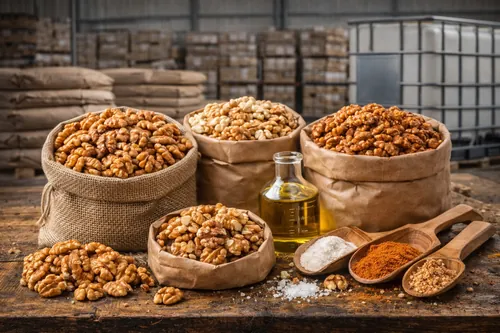
Bulk Oil Roasted Walnuts for wholesale supply — Atlas Nut Supply

Oil roasted walnut program options

Common program variables (availability varies by season and supplier program):

  • Roast profile: light/medium/dark targets defined by color + flavor intensity + crunch/texture.
  • Oil system: specify oil type constraints (labeling, allergen controls, and flavor neutrality).
  • Salt & seasoning: unsalted, salted, or seasoned; define target salt %, carrier limits, and label requirements.
  • Cut/grade: halves, pieces & halves, pieces, small pieces; define size distribution + allowable fines.
  • Stability targets: moisture/oxidation expectations and storage temperature range tied to shelf-life.
  • Documentation: COA, allergen statement, country of origin, traceability/lot coding (program dependent).

Need non-roasted walnut ingredients? See raw walnut kernels or pasteurized walnut kernels.

Industrial applications

Typical manufacturing and ingredient uses where roast uniformity and seasoning coverage matter:

  • Snack mixes & seasoned nut blends: consistent crunch and controlled fines for mix integrity.
  • Bakery inclusions & toppings: roast level tuned to bake-through flavor and appearance.
  • Bars, confectionery, cereal/granola: define roast intensity so walnuts don’t taste “flat” in the matrix.
  • Foodservice & private-label: program dependent—share pack/label specs and target sodium limits.

For deeper application guides, see the Atlas Nut Academy.

Roast level & seasoning control (what buyers typically specify)

“Oil roasted” is not one universal spec—buyers usually define targets and tolerances so every lot performs the same in production. If you don’t have a spec sheet, use the controls below as a starting point.

Roast profile

  • Target roast: light / medium / dark (or a custom reference sample).
  • Color tolerance: acceptable range for “too light/too dark” (visual or instrument-based, if you use it).
  • Flavor: nutty/toasty intensity, bitterness limits, and “fresh oil” notes (if any).
  • Texture: crunch target + maximum soft pieces.

Tip: If walnuts go into a second heat step (baking), target a slightly lighter roast so the finished product lands on-spec.

Salt & seasoning

  • Salted/unsalted: define target salt level and sodium constraints (if any).
  • Seasoning blend: provide formula or ingredient restrictions; note allergen/“may contain” expectations.
  • Coverage: target seasoning adhesion and allowable dusting.
  • Carrier limits: if you restrict oils, anticaking agents, or other carriers for labeling.

Tip: If you fill by weight on high-speed lines, include a max fines spec to protect flow and reduce dusting.

Want a faster match? Send a retained sample (ideal), or describe “pass/fail” conditions and we’ll propose a program with practical tolerances and QA checkpoints.

Product specifications (typical line-items)

Below is a practical “spec sheet” format used for industrial buying. Targets vary by supplier program and your end use, but these are the parameters buyers commonly lock before pricing and scheduling.

Prefer your own spec? Send it in your inquiry and we will quote to your document.

Spec area Typical options / targets (program-dependent) What to tell us for a quote
Product Oil roasted walnut kernels (Juglans regia) Oil roasted (confirm), plus any labeling restrictions
Cut / grade Halves, pieces & halves, pieces, small pieces; size distribution and fines limits as specified.
If you follow USDA-style sizing, specify the class (e.g., “halves” vs “pieces”). (Program dependent)
Target cut + allowable fines (%) + any max broken/soft pieces
Color / appearance Extra light / light / light amber / amber (or your own acceptance range). Color class (if required) and any “off-color”/discoloration limits
Roast level Light / medium / dark; defined by sensory + color tolerance + crunch target Target roast + tolerance notes (or reference sample)
Salt / seasoning Unsalted, salted, or seasoned programs; define salt %, carrier constraints, and adhesion/dusting limits Salted/unsalted + seasoning blend (if any) + label restrictions
Moisture Typically controlled for texture + shelf-life; many kernel programs list a maximum moisture on COA. Your max moisture target and/or shelf-life goal
Oxidation / stability COAs often include oxidation markers such as peroxide value (PV) and sometimes free fatty acids (FFA). Targets are set to protect flavor and shelf-life. PV and FFA targets (if you have them) + expected storage temperature + hold time
Defects & foreign material Shell fragments, foreign material, and defect tolerances as specified by program Max shell/foreign material and any defect definitions you use
Microbiology Program-dependent COA line-items (commonly including Salmonella as applicable to your requirements). Your micro targets + sampling plan expectations (if customer-mandated)
Allergens Tree nut (walnut). Cross-contact controls vary by facility/program. Allergen statement requirements and any “may contain” constraints
Packaging Bulk cartons/bags; pallet constraints supported (program dependent) Pack size + liner requirements + pallet height/weight limits
Documentation COA, traceability/lot coding, COO, and certification packets where available List required documents (COA, COO, organic, kosher, etc.)

Note: If you need strict numeric limits (e.g., PV/FFA ceilings, aflatoxin limits, or micro pass/fail criteria), include them in your inquiry so we can match the correct program and confirm documentation availability.

Grade & sizing guide (buyer language)

Many procurement teams align walnut kernel programs using standard grade terminology for size (halves vs pieces) and color (extra light through amber), then define defect tolerances and fines. If you use USDA-style terms, tell us the size class and color class you need.

Typical size classes

  • Halves: lots dominated by half kernels (program dependent definition).
  • Pieces & halves: mixture where halves are present but not dominant.
  • Pieces: pieces above a defined sieve/size threshold.
  • Small pieces: smaller fraction within a defined sieve band.

If you don’t use these terms, just specify your target size distribution and allowable fines.

Color classes

  • Extra light / Light / Light amber / Amber
  • Color is typically specified when appearance matters (toppings, retail mixes, premium inclusions).

For snack blends where seasoning dominates, some buyers prioritize roast uniformity over kernel skin color.

Not sure what grade you need? Tell us your end use (snack mix vs inclusion vs topping), and we’ll suggest a cost-effective cut/grade that still meets your visual and performance needs.

Specs checklist (quote-ready)

Send your spec sheet if you have one. Otherwise, start here for faster alignment.

  • Product: Oil roasted walnuts
  • Roast target: light/medium/dark (or custom) + tolerance notes
  • Seasoning: unsalted/salted/seasoned + label constraints (if applicable)
  • Oil system constraints: oil type restrictions, allergens, or ingredient declarations (if any)
  • Cut/grade: halves/pieces & halves/pieces/small pieces + allowable fines (%)
  • Moisture + oxidation expectations: shelf-life goal, storage conditions, and any PV/FFA limits
  • Micro requirements: targets and sampling plan expectations (if customer-mandated)
  • Defect limits: shell fragments, foreign material, off-color, soft pieces (as applicable)
  • Packaging: bags/cartons + liner + pallet constraints
  • Volume: first order + forecast cadence
  • Destination: city/state/country (and port if export)
  • Delivery window: required ship/receipt dates
  • Documentation: COA, traceability/COO, certifications if required

Share the end application and processing details and we’ll help confirm practical roast, seasoning, and packaging targets for consistent line performance and shelf-life.

FAQ: Oil roasted walnuts

What specs do you need to quote bulk oil roasted walnuts?

At minimum: roast target (color/flavor/crunch), salted/seasoned (if any), cut/grade (halves/pieces), packaging, volume, destination, and timeline. If you have PV/FFA or micro targets, include them to match the correct program.

Can you match a specific roast level or sample?

Yes. The fastest way is a retained sample. Otherwise, share a written target (light/medium/dark), acceptable color range, and sensory notes (bitterness limits, “toasty” intensity, crunch).

Can you supply salted or seasoned oil roasted walnuts?

Often yes, depending on program. Share the desired salt level, seasoning formula (or restrictions), allergen expectations, and labeling constraints so we can align an appropriate option.

Do you ship oil roasted walnuts outside the United States?

Yes. We support export lanes depending on destination, volume, packaging, and required documentation. Share the country/port and timeline for planning.

Can you provide COA and traceability documentation?

Yes. COA and traceability documentation are available per supplier program. If you require certifications or retailer documentation packets, note them in your inquiry.

How should oil roasted walnuts be stored for best shelf-life?

Keep sealed, cool, and protected from heat, oxygen, and light. Avoid temperature swings, and keep containers closed between use. Share your storage conditions and hold time for more specific handling guidance.