Walnuts • Kernels • Specs-first sourcing

Bulk Raw Walnut Kernels

Atlas Nut Supply, LLC supplies bulk raw walnut kernels to manufacturers, brands, and distributors. We cooperate with multiple California supply partners to match your procurement lane with the right style/grade (halves vs pieces), USDA color target, defect tolerances, moisture & shelf-life goals, packaging, and documentation.

Kernel programs succeed when spec inputs are defined early: style distribution (e.g., halves %), color range, allowable defects, and handling/storage expectations for oxidation control. If you run appearance-sensitive SKUs (bars, toppings, premium mixes), include your color and defect thresholds upfront to reduce rework.

Styles: halves / pieces Color: extra light → amber Moisture & stability targets Defects & foreign material limits U.S. + export lanes
Format
Raw walnut kernels
Programs
U.S. + global export
Support
COA • traceability • docs

Request a quote See specifications Back to catalog

Fastest quoting: share style/grade (halves vs pieces and any % requirement), color target (extra light / light / light amber / amber), pack size, monthly volume, and destination (and port if export).
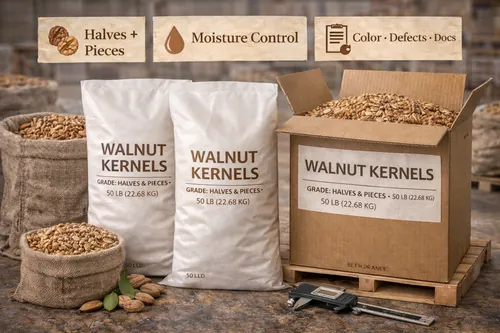
Bulk Raw Walnut Kernels for wholesale supply — Atlas Nut Supply

Raw walnut kernel program options

Common program variables (availability varies by season and supply partner):

  • Style / cut: halves, pieces & halves blends, pieces (screen-based tolerances can be specified).
  • Color target: extra light, light, light amber, amber (and in some markets, mixed color programs).
  • Defect limits: shell fragments, foreign material, discoloration, breakage thresholds, and total defect caps.
  • Moisture + stability: moisture target aligned to shelf-life and oxidation control expectations.
  • Micro requirements: testing plan, hold/release, and any customer-required pathogen targets.
  • Packaging: lined cartons/bags; export case/pallet patterns can be planned around your receiving lane.
  • Documentation: COA, traceability/COO, allergen statements, and certifications (program dependent).

Need other walnut formats? Consider walnut meal or retail packaging programs.

Industrial applications

Raw kernels are selected when flavor, texture, and appearance matter:

  • Bars & snacks: premium mixes, clusters, inclusions; color uniformity reduces visual variability.
  • Bakery & confectionery: toppings, inclusions, fillings; define breakage and fines tolerance.
  • Prepared foods: salads, sauces, pesto-style systems; specify pieces size for consistent bite.
  • Export programs: align labeling, COO, documentation, and container/temperature handling needs.

If appearance is critical, ask for a defined color combo and confirm how color is measured (chart vs instrument).

How kernels are commonly specified: style + color

Two inputs drive most walnut kernel RFQs: (1) style/size and (2) color range. Many programs reference USDA grade/color frameworks and industry charts for definitions and tolerances.

Common styles include halves and pieces categories; buyers may also specify minimum halves percentage (e.g., 80% halves). Screen-based size tolerances are often used to protect consistency in blending, topping distribution, and line dosing.

Color is typically specified using USDA Walnut Color Chart categories: extra light, light, light amber, and amber. Some programs handle “red” as a separate category.

Defect limits protect safety and appearance (e.g., shell fragments, foreign material, discoloration, excessive meal/fines). Define “total defects” and whether limits are per weight, per count, or both.

Moisture and oxidation control are core to stability. Cold-chain expectations and warehouse conditions should be aligned to your hold time and distribution lane.

If you want us to match an existing supplier’s program, paste your current spec sheet into the inquiry (or list your key parameters). We’ll align the closest available program and highlight any deltas.

Product specifications (quote-ready)

Below are commonly requested specification fields for bulk raw walnut kernels. Final values are program-dependent and set on the PO/spec. When buyers reference export frameworks, moisture is commonly capped at ≤ 5%.

Parameter Common spec options Notes
Product Raw walnut kernels (shelled) Industrial ingredient programs (U.S. + export lanes).
Style / cut Halves; Pieces & Halves; Pieces; custom blends Many buyers specify minimum halves % (e.g., 80% halves) for appearance.
Color target Extra Light / Light / Light Amber / Amber Color is often measured against standard charts or via optical grading systems.
Moisture Typical guideline ≤ 5.0% Some handling guidance targets lower moisture (e.g., ~4.3% or less) for stability.
Defects (examples) Shell fragments; foreign material; discoloration; meal/fines; total defect cap Define if limits are by weight, by count, or both; align to end-use sensitivity.
Chemical indicators (optional) Peroxide value (PV); free fatty acids (FFA) Often used as quality indicators tied to oxidation/rancidity risk (program dependent).
Micro requirements Program-specific (e.g., Salmonella negative, APC/yeast/mold limits) If you have a micro spec, include it; testing/hold-release can be planned.
Packaging Lined cartons/bags; export case packs; pallet patterns Common industrial packaging includes food-grade lined corrugate cartons; alternatives exist for export.
Documentation COA; allergen statement; traceability/COO; certifications (if required) Availability varies by program; specify what your customer requires.

If you need USDA grade language on documents (e.g., U.S. No. 1 with a specified color and style), tell us your preferred labeling format and destination requirements.

Quality checkpoints buyers commonly control

Raw kernels are naturally high in unsaturated fats, so oxidation control and careful handling matter. Below are the checkpoints most often negotiated in industrial programs.

If your finished product is appearance-sensitive, specify a color range (e.g., light or light amber) and whether “mixed colors” are acceptable.

Define tolerances for shell fragments and foreign material, plus a “total defects” cap to protect both safety and brand standards.

Align moisture target, packaging barrier needs, and cold-chain expectations to your hold time and distribution conditions.

If your customer requires pathogen controls or defined microbiology limits, include them with your inquiry so sampling/hold-release can be planned.

Tip: If you are switching suppliers, share your last COA and spec sheet. We’ll map parameters one-to-one to reduce qualification time.

Packaging options

Packaging is selected based on usage rate, handling, and oxidation control expectations:

  • Industrial cartons (common): food-grade corrugated cartons with inner liners (net weights vary by program).
  • Bulk bags: used for some receiving lanes; confirm puncture risk and reseal needs.
  • Export pack planning: case labels, COO markings, pallet patterns, and container loading constraints.
  • Optional atmosphere control: some programs use vacuum or gas flush packaging for stability (program dependent).

Share your receiving constraints (pallet height, dock type, case weight limits) and we’ll align packaging and pallet patterns accordingly.

Storage & handling notes (stability)

Walnut kernels can absorb odors and are sensitive to heat/oxygen exposure. Programs often align to cool, dry storage and clear warehouse handling rules.

  • Environment: keep cool and dry; avoid high humidity and temperature swings.
  • Odor control: store away from strong odors (kernels can absorb odors over time).
  • Inventory strategy: rotate stock and plan velocity-timed deliveries to minimize warehouse time.
  • Cold-chain (when needed): define if refrigerated transport/storage is expected for your lane.

If you tell us your expected hold time and ambient temperature range, we’ll recommend practical targets for moisture and packaging barrier needs.

Specs checklist (quote-ready)

Send your spec sheet if you have one. Otherwise, start here for faster alignment.

  • Product: Raw walnut kernels
  • Style / grade: halves vs pieces; any minimum halves % requirement; any screen-based size requirements
  • Color target: extra light / light / light amber / amber (or mixed colors if acceptable)
  • Defect limits: shell fragments, foreign material, discoloration, meal/fines, and total defect cap
  • Moisture target and oxidation/rancidity expectations (shelf-life goal + storage conditions)
  • Micro requirements: limits, pathogen targets, sampling plan preferences
  • Packaging: bags/cartons + liners; pallet constraints; label/marking needs
  • Volume: first order + forecast cadence
  • Destination: city/state/country (and port if export)
  • Delivery window: required ship/receipt dates
  • Documentation: COA, traceability/COO, allergen statement, certifications if required

Share your end application (bars, bakery, topping, sauces) and your process steps (mixing, baking, freezing) and we’ll suggest practical targets that reduce variability.

FAQ: Raw walnut kernels

What specs do you need to quote bulk raw walnut kernels?

At minimum: style/grade (halves vs pieces), color target, packaging, volume, destination, and timeline. To speed matching, include defect limits, moisture target, and any microbiology or documentation requirements.

How do I choose between halves and pieces?

Choose halves when visual appearance matters (premium mixes, toppings, higher-end inclusions). Choose pieces when you want more uniform bite or lower cost per lb in baked goods, fillings, sauces, and industrial blends. Many programs also offer blends (e.g., “pieces & halves”) tailored to your appearance tolerance.

Do you ship raw walnut kernels outside the United States?

Yes. We support export lanes depending on destination, volume, packaging, and required documentation. Share the country/port and timeline so we can align packing/labeling and logistics requirements.

Can you provide COA and traceability documentation?

Yes. COA and traceability/COO documentation are available per supplier program. If you require certifications (e.g., kosher/halal/organic), note them in your inquiry so we can match the right program.

How should raw walnut kernels be stored for best shelf-life?

Keep sealed, cool, and dry, protected from heat, oxygen, and light. Avoid high humidity and strong odors. Share your storage temperature range and expected hold time for more specific packaging and handling recommendations.