
Oxidation and Rancidity Control in Almond Ingredients: Storage and Packaging
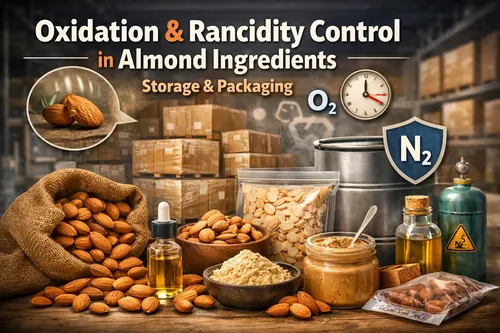
Industrial guide to oxidation and rancidity control in almond ingredients—how storage conditions, oxygen exposure, and packaging/liner choices impact shelf life and complaint risk. Includes format-by-format risk notes (kernels, slices, diced, meal/flour, butters, oils), practical packaging options (bags/cartons/liners/drums/totes), RFQ/spec fields, documentation checklist, receiving inspection steps, and supplier questions for bulk almond programs.
Previous: Specifying Moisture, Defects, and Color for Almond Kernels: Buyer Checklist • Next: Retail Packaging Programs for Almonds: Private Label, Sizing, and QC Points
Related: bulk almond products • products catalog • request a quote
What oxidation is (and why almond programs see rancidity drift)
Almonds contain natural oils that can oxidize over time. Oxidation is accelerated by oxygen exposure, warm temperatures, and (in some settings) light. The result is rancidity drift—sensory notes that can show up as “stale oil,” “painty,” “cardboard,” or “bitter” depending on product form and application.
- Temperature: warmer storage and warm transit lanes accelerate drift.
- Oxygen: broken seals, loose liners, frequent opening, and long open exposure add oxygen contact time.
- Surface area: cuts and milled products often show drift earlier than whole kernels.
- Processing: roasting can increase sensitivity by changing oil exposure and flavor baseline.
Procurement reality: complaints often track more strongly to storage + packaging + open exposure behavior than to the grade name alone.
Oxidation risk by almond format (what changes in the plant)
Not all almond ingredients behave the same. Surface area, fat exposure, and how the ingredient is handled after opening will influence how quickly oxidation becomes noticeable.
Typical risk patterns (relative, not absolute)
- Whole kernels: generally more stable than high-surface-area formats when stored well.
- Sliced / slivered / diced: more surface area → higher sensitivity, especially if staged open.
- Meal / flour: high surface area and fine particles can show drift sooner without strong packaging and fast turns.
- Roasted formats: can be more sensitive to storage and oxygen; flavor changes become noticeable sooner.
- Butters/pastes: oxygen exposure at the headspace and repeated lid opening can drive drift; separation management matters too.
- Oils: packaging and headspace control are critical; light and heat can be major accelerants.
Buyer takeaway
If your application is flavor-sensitive (mild bases, premium snacks, dairy-style products, toppings), treat packaging and storage as part of the “ingredient spec.”
Storage controls that reduce rancidity complaints
Storage is the “silent variable” in most bulk almond programs. Even strong incoming lots can drift if storage conditions are warm, humid, or odor-active.
Practical storage controls
- Keep it cool and stable: avoid hot corners, roofline heat, or staging near ovens/steam lines.
- Keep it dry: humidity spikes can soften texture and create handling issues; avoid wet docks and condensation.
- Keep it odor-free: almonds can pick up odors from cleaning chemicals, fragrances, or strong ingredients nearby.
- FIFO discipline: shelf-life posture improves when the oldest lots are consumed first.
- Minimize open time: reduce time that partially used containers sit open or loosely tied.
Common failure mode: product is opened for sampling or a partial run, then staged open for days. Pack size and reseal discipline often matter more than “premium liner” alone.
Packaging options for bulk almond programs
Most bulk almond programs use a limited set of proven packaging systems. The best option depends on your format, throughput, and how sensitive the program is to oxidation drift.
Common packaging families
- Lined cartons (kernels/cuts): strong protection + clean stacking; liner drives barrier performance.
- Lined bags (kernels/cuts): flexible handling; requires disciplined handling to avoid punctures and spills.
- Sealed bulk bags (meal/flour): common for milled formats; focus on seal integrity and moisture control.
- Drums/totes (butters/oils): better reseal/containment; headspace control becomes important after opening.
When higher barrier packaging tends to pay off
- Long storage windows: your plant holds inventory for months, not weeks.
- Warm/variable lanes: long transit or high seasonal heat exposure.
- Flavor-sensitive applications: mild bases or premium products.
- High-surface-area formats: sliced/diced/flour programs.
Liners and seal integrity: where shelf life is won or lost
Outer packaging provides structure. The liner and seal define how much oxygen and moisture reaches the product over time. A high-barrier liner with a weak seal behaves like a low-barrier liner.
What buyers should specify
- Liner requirement: food-grade liner; define barrier expectation if your program is sensitive.
- Seal method: heat seal vs tie vs other; define “sealed on arrival” acceptance criteria.
- Puncture policy: define whether taped punctures are rejectable (many programs treat as rejectable).
- Odor protection expectation: especially important in mixed warehouses or export lanes.
Open exposure control: the hidden driver of rancidity complaints
Most plants don’t measure “hours open,” but open exposure is often the strongest predictor of drift—especially for sliced/diced/flour. Design your program so that once a unit is opened, it is used quickly or resealed properly.
Actions that reduce exposure time
- Match pack size to consumption rate: smaller units for slow-use ingredients.
- Define reseal SOPs: who reseals, how, and where partials are staged.
- Stage partials in controlled areas: cool, dry, odor-free storage.
- Limit sampling exposure: sample quickly and reseal immediately.
QA tip: add one internal KPI: “hours from first opening to final use.” If this is long, packaging upgrades alone may not fix drift.
Spec fields buyers should include (copy/paste friendly)
If you want fewer back-and-forths and fewer disputes, specify storage and packaging in measurable terms. Below is a practical checklist you can paste into an RFQ or spec sheet.
Packaging + storage specification fields
- Product + format: kernels, sliced, diced, meal/flour, butter, oil.
- Processing state: raw vs roasted; pasteurized if required.
- Packaging type: carton/bag/drum/tote; unit size (net weight).
- Liner expectation: standard vs higher barrier (if your program is shelf-life sensitive).
- Seal method: heat seal / other; define sealed-on-arrival requirement.
- Pallet configuration: units/layer, layers/pallet, max pallet height, no overhang, stabilization requirements.
- Storage posture expectation: cool/dry/odor-free; define any special handling (e.g., avoid heat exposure).
- Sensory expectation: clean almond aroma; no rancid/painty/musty notes at receipt.
- Receiving acceptance criteria: punctures/broken seals/water damage policy.
Example enforceable language
- Seal integrity: “All units must arrive sealed and intact; broken seals or punctures are rejectable.”
- Odor: “Product must arrive free of foreign odors (chemical, diesel, musty).”
- Packaging damage: “Water-damaged packaging is subject to hold and QA disposition.”
COA and documentation fields that support oxidation control
COAs vary by supplier program and format, but buyers can reduce friction by requesting documentation that improves traceability and supports shelf-life posture.
Common documentation requests
- Lot identification: must match unit labels and pallet tags.
- Product description: format + processing state (raw/roasted; pasteurized if applicable).
- Moisture: relevant for storage and texture posture.
- Allergen statement: almond declaration aligned to labeling needs.
- Country of origin: for compliance and labeling workflows.
- Traceability identifiers: shipment/production identifiers to isolate issues.
- Any oxidation-related testing you rely on: confirm availability and frequency (varies by program).
Receiving inspection checklist (oxidation + packaging focused)
A fast receiving checklist catches the most common oxidation drivers before product enters storage.
Packaging checks
- Seal integrity: liners closed as specified; no open liners, broken seals, or “patched” punctures.
- Punctures/abrasion: inspect corners and bottom layers.
- Water damage: wet cartons, stains, warped bottoms; apply your acceptance policy.
- Odor exposure: sniff test at opening; reject foreign odors when policy requires.
- Labeling/lot code: readable and matches COA + shipping docs.
Product checks
- Sensory: clean almond aroma; no rancid/painty/musty notes.
- Visual: unusual fines, excessive crumbs (can indicate rough handling), foreign material.
- Retains: keep retained samples by lot for shelf-life tracking and complaint investigation.
Supplier questions that reduce rancidity risk
Packaging and storage questions
- What packaging and liner options are available for this format? unit sizes, liner tiers, seal methods.
- How is the liner sealed? heat seal vs tie; and what “sealed on arrival” looks like.
- What is your typical storage posture pre-ship? cool storage vs ambient, and time from pack to ship.
- What are your palletization standards? no overhang, max height, stabilization methods.
- What is the claims process for packaging failures? photos, timelines, and disposition rules.
Quality posture questions
- What shelf-life guidance do you provide for this format? and what assumptions (temperature, packaging, unopened vs opened).
- What sensory checks are used? and how are borderline lots handled (program-dependent).
- What tests are available? moisture is common; oxidation-related tests may be available by program—confirm what’s feasible.
FAQ: oxidation and rancidity control in bulk almond ingredients
Do roasted almonds go rancid faster than raw?
Roasted formats can show drift sooner in some programs because the flavor baseline is more developed and changes can be noticed earlier. In practice, storage temperature, oxygen exposure, and open exposure time are usually the dominant variables.
Is “higher barrier liner” always the answer?
Not always. If your plant holds opened partials for long periods, pack size and reseal SOPs can deliver bigger improvements than liner upgrades alone. The best programs align barrier, seal integrity, and open exposure control together.
What is the fastest operational change to reduce rancidity complaints?
Reduce open exposure time: smaller pack sizes for slow-use ingredients, disciplined reseal, and controlled staging of partial units.
Next step
If you share your almond format (kernels/sliced/diced/flour/butter/oil), application, target shelf life, storage posture (cool storage vs ambient), and how quickly you consume opened units, we can recommend packaging formats and liner/barrier options that match your risk posture and lane. Use Request a Quote or email contact@atlastradehouse.com.