
Walnuts • In-shell (bleached/treated) • Quote-ready specs

Bulk In-Shell Walnuts (Bleached)

Atlas Nut Supply, LLC supplies bulk in-shell walnuts with bleached/treated shell appearance for markets that prefer a brighter, more uniform shell presentation. We cooperate with multiple California supplier programs to align the right size/count, shell appearance targets, packaging, documentation, and delivery lane (U.S. + export).

“Bleached/treated” is a shell appearance program (cosmetic target). Availability depends on supplier capability and destination requirements—especially for export lanes.

Format
In-shell walnuts (bleached)
Programs
U.S. + global export
Support
COA • traceability • docs

Request a quote View specifications Back to catalog

Fastest quoting: share size/count (or diameter screen), your bleached/treated appearance target (shade + uniformity), pack format, volume, and destination (and port if export).
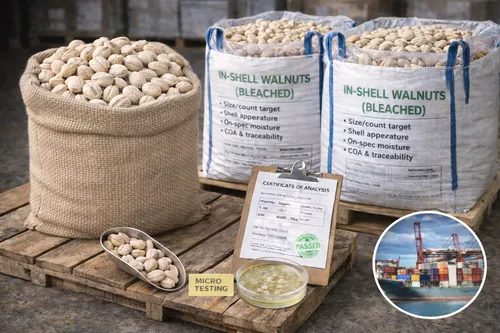
Bulk In-Shell Walnuts (Bleached) for wholesale supply — Atlas Nut Supply

Product specifications (snapshot)

Below is a practical B2B spec snapshot used by many buyers to lock quotes quickly. Exact values and documents vary by supplier program and destination.

Core spec fields

Typical fields buyers specify:

Variety (Hartley/Chandler/Vina/etc.) Grade (USDA / UNECE where applicable) Size class or diameter screen Bleached/treated appearance target Crop year / current harvest Packaging + pallet pattern Destination + incoterms

If you already buy “Jumbo/Large bleached” programs, send your prior spec sheet and we’ll match the closest equivalent across California supply lanes.

Moisture, storage & handling

  • Temperature: keep cool and stable; avoid hot containers and temperature swings that can drive condensation.
  • Humidity: keep dry; protect from high RH environments to preserve shell integrity and reduce quality risk.
  • Odors: store away from strong odors (nuts can absorb odors over time).
  • Packaging barrier: where applicable, use materials that reduce exposure to air/light; nitrogen flush can extend sealed shelf life for certain finished goods.

Packaging formats

Common bulk pack formats used by suppliers and exporters:

  • Woven poly sacks / bulk bags: 50 lb (22.68 kg) or 25 kg (55 lb) are common
  • Smaller export packs: 10 kg options exist in some programs
  • Totes: ~2,200 lb bulk totes available in certain supply lanes
  • Container planning: pallet pattern + ventilation/liner choices can vary by route and season

Typical documentation

  • COA (per lot) and traceability
  • Country of origin (COO) and labeling support where applicable
  • Allergen statements (tree nuts) and facility handling statements
  • Food safety / compliance documents (program dependent)

Export lanes: share destination and any import registration requirements so we can align the right document set early.

Bleached/treated shell appearance: what to specify

Buyers often use “bleached” as shorthand for a brighter, more uniform shell. For quoting, it helps to translate that into measurable appearance expectations:

  • Shade target: “bright/clean” vs. “light” vs. “mid” (destination preference varies)
  • Uniformity: maximum acceptable mottling/stain/contrast
  • Finish: acceptable chalky residue (common with some bleached programs) vs. “clean dry shell” expectation
  • Integrity: seam, splits, perforations, and broken shell limits aligned to your grade needs

Important: “bleached/treated” refers to shell appearance, not kernel color grade. If you need kernel color targets, specify those separately.

Who uses bleached in-shell programs?

Common demand patterns (program dependent):

  • Retail & gift presentations where shell appearance matters
  • Export markets with preference for bright, uniform shells
  • Seasonal promotions and mixed in-shell assortments
  • Cracking operations that prefer a consistent in-shell feedstock

If your destination has restrictions on shell treatments, tell us up front so we only quote compliant lanes.

Size & grade reference (helps avoid quoting mismatches)

Different buyers express in-shell size in different ways: named sizes (e.g., Jumbo/Large), diameter screens (mm), or count per kg/lb. If you tell us how your team buys today, we can quote in the same language.

How buyers specify Examples Notes for quoting
USDA named size class Mammoth (≤12% pass 96/64" ≈ 38.1mm)
Jumbo (≤12% pass 80/64" ≈ 31.8mm)
Large (≤12% pass 77/64" ≈ 30.6mm)
Medium (≥88% pass 77/64" and ≤12% pass 73/64" ≈ 29.0mm)
Standard (≤12% pass 73/64" ≈ 29.0mm)
Baby (≥88% pass 74/64" ≈ 29.4mm; ≤10% pass 60/64" ≈ 23.8mm)
Great for U.S.-aligned specs and domestic programs. If you buy “Jumbo/Large bleached” today, share the exact language on your spec sheet.
Diameter screen range (mm) 34mm+ • 32–34mm • 30–32mm • 28–30mm • 24–28mm (examples) Common for export programs and cross-border buying. Helps when “Jumbo” means different things across regions.
Count / weight Count per kg/lb (buyer-defined), or “J/L” programs (Jumbo/Large blend) Useful for automated cracking lines and certain retail packs. Provide tolerance (±) if you require a tight range.
Grade reference USDA U.S. No. 1 / No. 2 (program dependent)
UNECE Extra / Class I / Class II (export control context)
Grade aligns shell integrity, cleanliness, and kernel condition. If you have defect limits (splits, stain, insect damage), attach your spec.

Quote tip: For “bleached” programs, specify appearance targets separately from grade and size. That prevents mismatches like “bright shell” being assumed to mean “higher grade.”

In-shell walnuts (bleached) options

Common program variables (availability varies by season and supplier program):

  • Size programs: named sizes, diameter screens, or buyer-defined count/weight
  • Variety: Hartley/Chandler/Vina/Howard and other California programs (program dependent)
  • Shell appearance target: bleached/treated shade + uniformity expectations
  • Shell integrity: splits, cracks, broken shells, stain/contrast limits (specify tolerances)
  • Moisture + storage handling: expectations to protect quality during transit and warehousing
  • Packaging: sacks/bags, cartons, totes; pallet constraints and container loading options
  • Traceability + COA: available per supplier program

Industrial applications

Typical uses and channels:

  • Retail and gift programs (program dependent)
  • Cracking operations and processing lines
  • Export lanes for in-shell demand
  • Seasonal promotions and mixed nut displays

For deeper application guides, see the Atlas Nut Academy.

Specs checklist (quote-ready)

Send your spec sheet if you have one. Otherwise, start here—this list mirrors what suppliers typically need to confirm the right program and lane.

  • Product: In-shell walnuts (bleached/treated shell appearance)
  • Crop year: current harvest vs. carryover acceptance (if applicable)
  • Variety / type: Hartley / Chandler / Vina / mixed varieties (program dependent)
  • Grade reference: USDA/UNECE preference (or buyer-defined defect limits)
  • Size/count target: USDA named size, diameter screen (mm), or count/weight + tolerance
  • Shell appearance target: shade/brightness + uniformity; acceptable chalky residue (if any)
  • Shell integrity: splits/cracks/broken shell limits; stain/contrast tolerance; foreign material tolerance
  • Moisture + storage expectations: handling notes for shelf-life, transit temperature, and humidity limits
  • Micro requirements and allergen handling expectations (as applicable)
  • Packaging: sacks/bags/cartons/totes + pallet constraints; container loading requirements (if export)
  • Volume: first order + forecast cadence (monthly/quarterly)
  • Destination: city/state/country (and port if export)
  • Delivery window: required ship/receipt dates
  • Documentation: COA, traceability/COO, certifications if required, labeling requirements

Share the end application and lane details and we’ll help confirm the right size/count + packaging targets for performance and shelf-life—especially for warm-season shipments.

FAQ: In-shell walnuts (bleached)

What specs do you need to quote bulk in-shell walnuts (bleached)?

At minimum: size/count target (or diameter screen), shell appearance target (shade + uniformity), packaging format, volume, destination (and port if export), and timeline. If you have a spec sheet, share it; otherwise use the checklist above.

What is the difference between natural and bleached in-shell walnuts?

Natural refers to an unlightened shell appearance. Bleached/treated programs target a brighter, more uniform shell color for specific market preferences. It’s a shell appearance program—if you need kernel color or defect limits, specify those separately.

Do you ship in-shell walnuts (bleached) outside the United States?

Yes. We support export lanes depending on destination, volume, and required documentation. Share the country/port, any import restrictions related to shell treatments, and your timeline for planning.

Can you provide COA and traceability documentation?

Yes. COA and traceability documentation are available per supplier program. If you require certifications or specific compliance documents, note them in your inquiry.

How should in-shell walnuts (bleached) be stored for best shelf-life?

Keep sealed, cool, and dry, protected from heat, humidity, and strong odors. Avoid temperature swings to reduce condensation risk. For long export routes, tell us your expected transit + warehouse conditions so we can suggest packaging and handling notes appropriate for your lane.

What packaging formats are most common for bulk programs?

Common formats include 50 lb (22.68 kg) and 25 kg sacks/bags, with totes and smaller export packs available in some programs. Packaging can be aligned to your handling equipment and container loading needs.

How do I specify “Jumbo/Large bleached” correctly?

Send your existing spec language (or the exact size reference you buy to today). “J/L” can mean a blend of size classes, a diameter screen, or a buyer-defined count range. Sharing the reference prevents mismatches.