Walnuts • Protein ingredient • Defatted/press-cake • Quote-ready specs • California sourcing

Bulk Defatted Walnut Protein Powder

Atlas Nut Supply, LLC supplies bulk defatted walnut protein powder (often produced from walnut press-cake/meal after oil extraction) to manufacturers, brands, and distributors. We cooperate with multiple California supplier programs to align the right protein & residual fat targets, particle size/mesh, micro/allergen requirements, packaging, documentation, and delivery lane.

Buyers typically specify this ingredient by protein %, residual fat %, moisture, and particle size distribution to match flowability, dispersibility, and finished-product texture.

Format
Defatted walnut protein powder
Programs
U.S. + global export
Support
COA • traceability • docs

Request a quote Read applications Back to catalog

Fastest quoting: share target protein %, residual fat %, desired mesh/particle size, microbiology targets (if needed), packaging, and destination (and port if export).
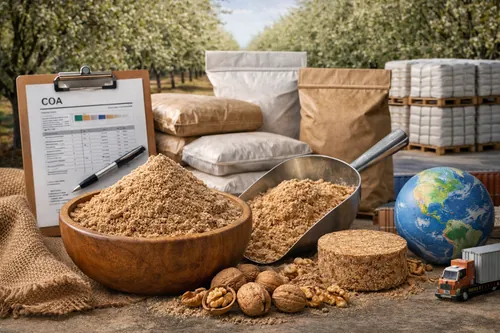
Bulk Defatted Walnut Protein Powder for wholesale supply — Atlas Nut Supply

Technical specification snapshot

Use this as a starting point. Final values are program-dependent and should be confirmed on the supplier COA. If you have an internal spec sheet, send it and we’ll match it.

Ingredient Defatted walnut press-cake/meal powder (milled)
Also referred to as: defatted walnut flour / walnut protein flour (naming varies by program).
Origin programs California supplier programs (U.S.); export lanes supported on request
Protein target Buyer-specified (commonly quoted as % as-is)
Typical range request: 35–45%+
Higher protein targets may indicate a “concentrate” style program versus standard press-cake meal.
Residual fat target Buyer-specified (commonly quoted as % as-is)
Typical range request: 8–12%
Residual oil impacts flavor intensity, oxidation risk, and shelf-life expectations.
Moisture / aw Moisture max often specified; water activity may be requested for stability control
Moisture max commonly 6–8%
Particle size Mesh / PSD defined to match your process (dosing, blending, RTD dispersion)
Common mesh requests: 60–200
For beverages: ask for tighter PSD + lower agglomeration/clumping risk.
Color / flavor Program-dependent (natural walnut notes). Specify if you need lighter color or reduced bitterness.
Roast/heat history and residual oil can shift color and flavor.
Microbiology Targets set by your QA program (and destination market)
Common asks: Salmonella negative (per sampling plan), APC, yeast/mold, E. coli/coliforms.
Foreign material Metal detection and/or screening per program; define tolerance and inspection expectations
If you run high-speed lines, share critical-to-quality risks so we can align controls.
Allergen Tree nut: walnut (declare by specific type)
Share cross-contact restrictions (e.g., peanuts, sesame) if required.
Certifications Program dependent (examples: HACCP/GFSI site certifications; Organic/Kosher/Halal on request)
Only include what you need—cert requirements can narrow program options.
Documentation COA, lot traceability, country of origin, allergen statement, and supporting compliance documents (program dependent)
Shelf-life guidance Storage and shelf-life depend on residual oil, packaging barrier, and temperature control
Tell us your target shelf-life and storage conditions; we’ll recommend the best packaging program.

Want a tighter spec? Share your critical-to-quality list (protein/fat/moisture/mesh + micro limits) and we’ll map it to an available program.

Important: “Defatted walnut protein powder” can describe multiple commercial programs (standard press-cake meal vs concentrates). If you need beverage-grade performance, ask for tighter PSD and validated micro controls.

How defatted walnut protein powder is produced

Supplier programs vary, but most commercial options start with oil extraction and then milling the remaining meal into a controlled powder. Here’s how buyers typically describe/qualify programs during procurement:

Step 1

Oil extraction (pressing)

  • Walnut kernels are pressed to remove oil (press type and conditions vary)
  • The remaining meal/press-cake retains a controlled amount of residual oil
Step 2

Milling & screening

  • Meal is milled to target particle size (mesh/PSD)
  • Screening controls fines and oversize for dosing and dispersion performance
Step 3

Optional heat/micro controls

  • Some programs apply validated lethality steps or enhanced controls
  • Specify micro targets and destination-market requirements up front
Step 4

Packaging & barrier selection

  • Barrier liners reduce oxygen/moisture pickup and clumping risk
  • Choose pack format to match your receiving and line feed systems

If you are switching from another plant protein, tell us your target performance (hydration, dispersion, flavor) and we’ll recommend a mesh and packaging approach.

Where it performs best

Typical applications (program dependent):

  • Nutrition bars and inclusions (protein boost + nut character)
  • Dry mixes (baking mixes, pancake/waffle, functional blends)
  • Bakery systems (protein enrichment; texture/crumb management)
  • RTD / beverage powders (requires tighter particle size + micro controls)
  • R&D blends for plant-based formulation and prototyping

Formulation notes buyers often request

  • Particle size: finer mesh improves dispersion but may increase dusting/clumping sensitivity
  • Residual oil: impacts flavor, mouthfeel, and oxidation stability—align fat % to your shelf-life target
  • Moisture control: low moisture supports flowability; consider barrier packaging for humid lanes
  • Flavor targets: specify intensity and any bitterness constraints for beverages and light-color bakery

For deeper application guides, see the Atlas Nut Academy.

Quality, safety, and documentation

Defatted nut powders are low-moisture ingredients that can be sensitive to oxidation and require strong supplier controls. Specify your QA requirements up front so the right supplier program is selected.

Common documents (program dependent)

  • COA (protein, fat, moisture; microbiology as requested)
  • Lot traceability + production/pack dates
  • Country of origin statement
  • Allergen statement and cross-contact disclosures
  • Food safety plan support (as available; site certification info on request)

Common testing targets buyers ask for

  • Micro: Salmonella negative (per plan), APC, yeast/mold, E. coli/coliforms
  • Physical: sieve/mesh verification, metal detection/screening controls
  • Chemistry: moisture, fat, protein, ash; rancidity/oxidation indicators if specified

If you are exporting, share destination requirements early (documents, sampling plans, language, and pallet marks).

Storage and shelf-life depend heavily on residual oil, oxygen exposure, temperature, and packaging barrier. If you have a hold-time risk (slow turns), ask for a tighter oxidation/stability approach.

Packaging & logistics options

Common packaging formats (availability varies by supplier program):

  • Multiwall kraft bags with food-grade liner (common: 25 lb / 50 lb)
  • Cartons with inner liner (for some retail/co-pack workflows)
  • Drums or pails for moisture-sensitive programs (application dependent)
  • Super sacks / totes for high-volume ingredient plants (program dependent)

Export lane readiness

  • Container loading constraints and pallet pattern alignment
  • Documentation bundles (COA, COO, allergen statements, certificates as required)
  • Moisture/oxygen protection considerations for humid/long-transit lanes

Handling & storage guidance

General best practices (confirm for your exact program):

  • Keep sealed and cool to protect flavor and oxidation stability
  • Avoid humidity swings to reduce clumping and liner condensation risk
  • Protect from heat and light during staging and transit
  • Use FIFO and track lot numbers for QA traceability

Tell us your facility conditions (temperature, humidity, storage duration) and we’ll recommend the right packaging barrier and receiving SOP notes.

Specs checklist (quote-ready)

Send your spec sheet if you have one. Otherwise, start with the checklist below for faster alignment.

  • Product: Defatted walnut protein powder (press-cake/meal powder)
  • Target protein % (as-is basis preferred) and measurement method if you require one
  • Residual fat % target (as-is) + any oxidation/rancidity limits you track
  • Moisture max (and water activity if your QA program requires it)
  • Particle size / mesh target (and PSD needs: tighter distribution, low fines, low dusting)
  • Micro requirements (Salmonella plan, APC, yeast/mold, E. coli/coliforms)
  • Allergen handling expectations and cross-contact restrictions (if applicable)
  • Flavor/color targets (especially for beverage or light-color bakery)
  • Packaging: bags/cartons/pails/drums/totes + pallet constraints
  • Volume: first order + forecast and delivery cadence
  • Destination: city/state/country (and port if export)
  • Delivery window: required ship/receipt dates
  • Documentation: COA, traceability, certifications if required

Share the end application (RTD, dry mix, bar, bakery) and we’ll help confirm the best protein/fat targets and particle size for performance and shelf-life.

FAQ: Defatted walnut protein powder

What is the difference between defatted walnut powder, protein concentrate, and protein isolate?

Names vary by supplier. In general: defatted walnut powder is milled press-cake/meal after oil extraction; protein concentrates typically push higher protein density via additional processing/selection; protein isolates are highly refined and can behave differently in beverages (solubility/texture). Tell us your application and target protein/fat so we align the right program.

What specs do you need to quote bulk defatted walnut protein powder?

At minimum: target protein %, residual fat %, desired mesh/particle size, packaging, volume, and delivery lane. If you have a spec sheet, share it; otherwise use the checklist above.

Is defatted walnut protein powder suitable for beverages?

Often yes, depending on grind/PSD and micro controls. For beverage use, buyers frequently request finer mesh with tighter PSD, lower clumping risk, and defined flavor/bitterness constraints. Share your beverage format (RTD, dry mix) and mixing conditions.

Can you provide COA and traceability documentation?

Yes. COA and traceability documentation are available per supplier program. If you require certifications (Organic/Kosher/Halal or specific site certifications), note them in your inquiry.

Do you ship defatted walnut protein powder outside the United States?

Yes. We support export lanes depending on destination, volume, packaging, and required documentation. Share the country/port and timeline for planning.

How should defatted walnut protein powder be stored for best shelf-life?

Storage guidance depends on the exact program and packaging. In general, keep sealed, cool, and dry; protect from heat, light, and humidity. Because residual oil can influence oxidation risk, align packaging barrier and storage temperature to your required hold time.